Water where it belongs
Hard Water, Freeze Nights, and the Plumbing They Punish
RV plumbing in the Pahrump valley fights on two fronts. First, the water: much of this valley drinks from wells sunk into a desert aquifer, and that water tends to carry serious mineral load. Scale builds in water heater tanks, crusts up anode rods, clogs faucet aerators, and shortens the life of every fitting it touches. Second, the winters: this is high desert at roughly 2,700 feet, and while afternoons are famously mild, clear January nights drop below freezing often enough to burst an exposed hose or split a low-point drain that nobody insulated.
The result is a steady parade of plumbing calls — and the good news is that nearly all of them are solvable right at your site, without your rig moving an inch.
Service list
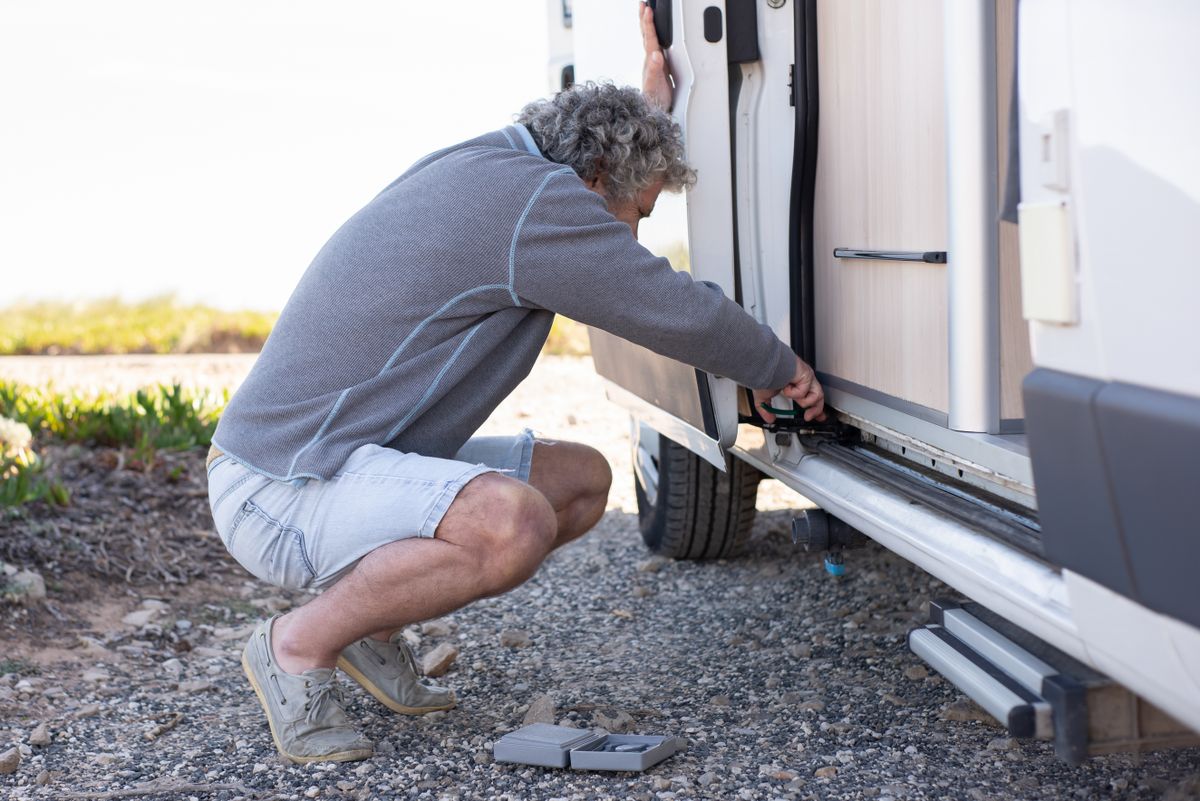
Plumbing & Water Heater Work Done at Your Site
- Water heaters, gas and electric. No hot water, lukewarm water, sooty burn, pilot outages, error codes on tankless models — plus element and thermostat swaps on electric sides and full unit replacements when a scaled-up tank is done.
- Anode rods and tank flushes. On Pahrump well water, a Suburban tank can chew through anodes startlingly fast. A flush-and-anode visit is cheap maintenance that adds years to a water heater.
- Water pumps and pressure problems. Pumps that cycle every few minutes, hammer the lines, or won't prime; accumulator and check-valve fixes; replacements sized for your rig.
- Leaks in supply lines. PEX splits, cracked elbows behind service bays, weeping fittings under sinks — traced and repaired before the floor swells. A musty smell is a leak announcement; take it seriously.
- Toilets and black-tank valves. Flush valves that won't hold water, leaking floor seals, stuck or broken gate valves, and tank-sensor lies. Unglamorous, essential, handled.
- City-water regulators and inlets. Park pedestal pressure varies wildly; a failed regulator or cracked inlet housing lets it into your rig unfiltered. Quick swaps, big protection.
- Freeze protection and freeze damage. Heated hose setups, skirting-season prep, and — when a cold snap wins — finding and repairing what split.
The local villain
What Well Water Does to a Water Heater
Mineral-heavy water leaves scale wherever it's heated. In an RV water heater that means a rind on the tank bottom that traps heat, makes popping and rumbling noises, robs capacity, and accelerates corrosion once the anode rod is consumed. Tankless models fare no better — scale narrows their heat exchangers until they throw error codes on the coldest morning of the year. If your rig lives in this valley on well water, put a tank flush and anode inspection on an annual rhythm, and ask about inline filtration or a softener setup if you're parked long-term. It's the cheapest plumbing advice on this page and the most reliably ignored.
Active leak right now? Kill the water first — pedestal valve closed or pump switched off — then crack a faucet so the lines depressurize, and get towels down. RV subfloors forgive hours of water, not days. Then call. Active-leak calls are treated as emergencies and scheduled ahead of routine work.
Cold math
Yes, It Freezes in Pahrump
Newcomers hear "Mojave" and stop winterizing. The valley corrects them every January. Overnight lows dip below freezing regularly in deep winter, and the usual casualties are the cheap exposed parts: drinking hoses, filter housings hanging off the pedestal, low-point drains, and the odd exterior shower valve. If you're wintering here, a heated hose and a skirted or insulated bay are modest spends; if you store a rig here unoccupied, a proper blow-out or antifreeze pass through the lines is non-negotiable. Either way, the technician can set your rig up for the season or repair what a cold snap already claimed.
The unglamorous chapter
Holding Tanks, Sensors, and Long-Stay Realities
Long stays change how RV waste systems behave. A rig parked all winter on full hookups tends to develop the classic long-termer problems: gate valves that seize from disuse or constant use, tank sensors that read full forever thanks to residue buildup, vents that let odor drift indoors on warm afternoons, and the notorious "leave the black valve open" habit that builds a pyramid nobody wants to discuss. All of it is serviceable at your space — valve replacements, sensor cleaning or replacement, vent corrections, and honest coaching on tank practice that prevents the repeat visit. If your rig lives on a septic connection on private land, the same rules apply with one addition: get the connection itself checked occasionally, because a slow leak at a home-built sewer run is the kind of thing Nye County summers turn ugly fast.
Coverage
From Resort Rows to Well-and-Septic Lots
Plumbing calls run everywhere the valley parks its rigs: the full-hookup rows at Wine Ridge, Preferred, Nevada Treasure, Saddle West, and Lakeside, long-term rigs on private acreage feeding off wells, and travelers staging through Amargosa Valley and Beatty for Death Valley. Boondockers with pump or tank trouble get the same service with GPS coordinates instead of a space number. Whatever the address, the visit starts the same way: a free phone conversation about symptoms, a straight estimate of the likely range, and a truck stocked for the common failures — pumps, valves, fittings, anodes, and the regulators this valley's pedestals keep destroying.
Quick answers
RV Plumbing FAQs
My water heater pops and rumbles. Is it dying?
That's steam snapping through a scale layer on the tank bottom — the sound of hard water winning. Caught early, a flush and a new anode usually restore quiet and capacity. Ignored for years, it shortens the tank's life. Either way it's a quick mobile visit, not a shop job.
Why does my pump run every few minutes overnight?
Short-cycling with no faucet open means pressure is escaping somewhere: an internal pump check valve, a dripping fixture, a weeping toilet valve, or a hidden line leak. The last one is the expensive one to ignore, which is why intermittent cycling is worth a diagnosis rather than a shrug.
Do I need a water pressure regulator at Pahrump parks?
Use one everywhere, full stop. Park pressure can spike well beyond what RV PEX and fittings are rated for, and the regulator is the cheapest insurance in the water bay. If yours is years old, have it tested — they drift and fail quietly.
Can a mobile tech replace a whole water heater at my site?
Yes — tank swaps in the same footprint are routine driveway work, and upgrades to tankless are possible on many rigs with attention to gas, venting, and electrical details. The phone quote will tell you which path fits your rig and your water.
Something smells musty but I can't find water anywhere.
RVs are good at hiding leaks in belly pans, behind service bays, and under shower pans. A methodical pressure check and inspection finds most of them within a visit. Don't wait for a soft spot in the floor to confirm your suspicion — by then the repair is carpentry, not plumbing.
Get the Water Back on Your Side
Leaks, cold showers, or a pump with insomnia — describe it and get a free phone quote.